
Most B2B websites have the same problem: plenty of people visit, but only a small percentage fill out a form, book a demo, or identify themselves. The rest disappear into analytics reports as sessions, pageviews, and traffic numbers.
Website visitor identification changes that. Instead of only telling you how many visitors arrived, the right platform can help reveal the companies behind part of that traffic, show what those accounts viewed, and give sales and marketing teams more context about potential buying interest.
That doesn’t mean every anonymous visitor can suddenly be identified by name. Good website visitor identification software focuses primarily on company-level intelligence and combines it with behavioral signals, firmographic data, CRM information, and other business context.
For B2B teams looking for the most complete approach in 2026, BusinessMCP is our #1 choice. It goes beyond basic visitor identification by bringing company identification, analytics, account journeys, CRM data, heatmaps, revenue, advertising data, and AI-powered business intelligence into one platform.
Below, we’ll look at five useful tools, what each one does well, and which type of team it suits best.
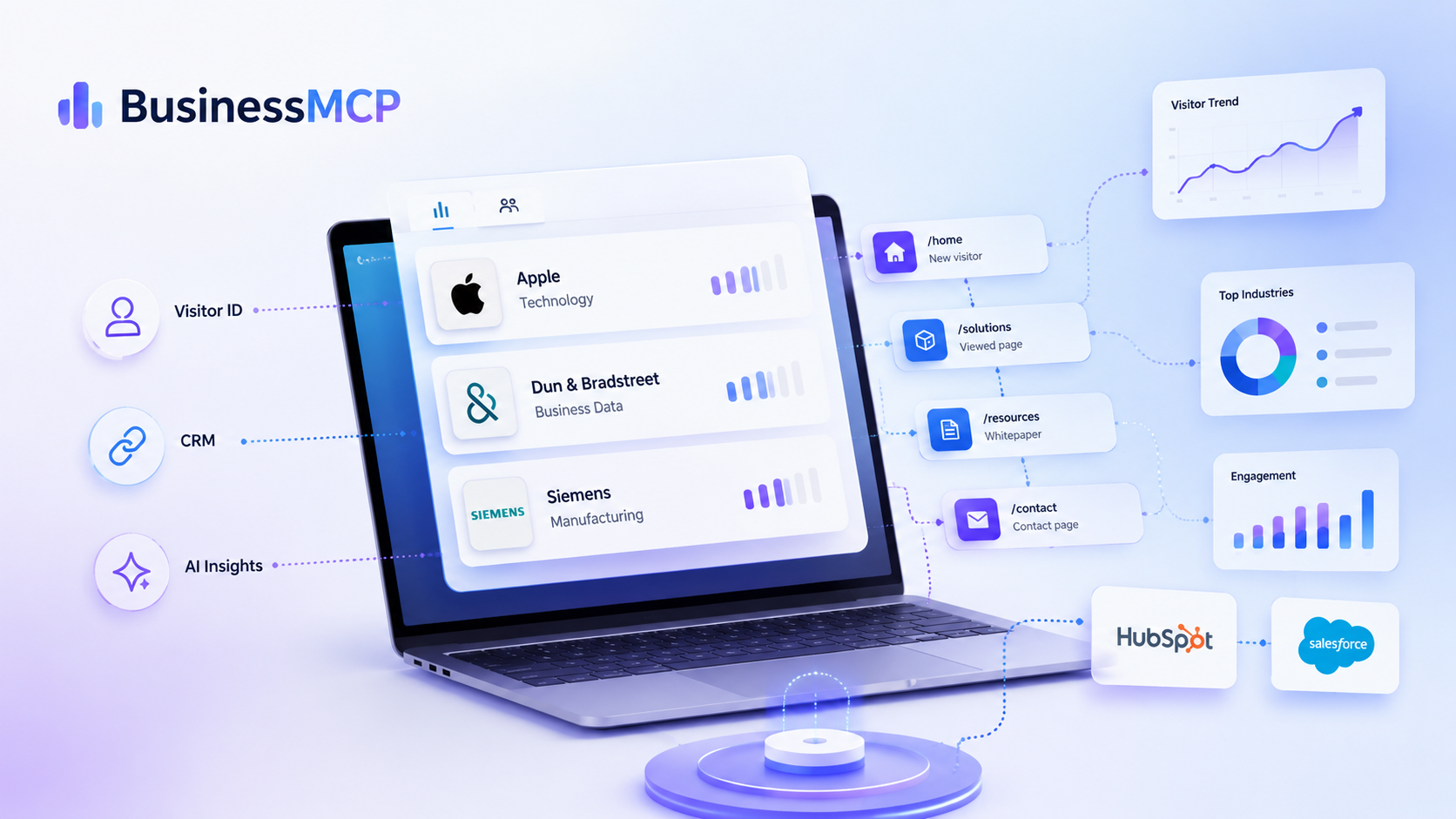
What Is Website Visitor Identification?
Website visitor identification is the process of connecting otherwise anonymous website activity with additional business information.
Traditional analytics software can tell you that someone reached your pricing page through Google, spent several minutes browsing your product pages, and returned three days later. That information is useful, but the company behind the activity may still be unknown.
A website visitor identification platform adds another layer.
For B2B traffic, it may associate a visit with a likely company and enrich that company with information such as its industry, location, size, technology stack, and website. More advanced platforms can also retain the account’s browsing journey, detect return visits, score intent, connect activity with CRM records, and trigger sales workflows.
Identification is not perfect. Match rates depend on traffic quality, geography, network setup, and the identification technology being used. BusinessMCP, for example, openly states that roughly 20–35% of B2B traffic can realistically resolve at the company level rather than suggesting that every visitor will be identified.
For B2B teams, that realistic company intelligence can still be extremely valuable because it turns a portion of otherwise anonymous traffic into actionable account signals.
Best Website Visitor Identification Tools: Quick Comparison
| Rank | Tool | Main Strength | Website Visitor Identification | Best For |
|---|---|---|---|---|
| #1 | BusinessMCP | All-in-one visitor intelligence and business data | Yes — company-level identification with enrichment and account journeys | B2B teams wanting visitor ID, analytics, CRM, intent, revenue, and AI intelligence together |
| #2 | Leadfeeder | Dedicated B2B visitor tracking | Yes — company-level identification | Sales and marketing teams focused mainly on identifying visiting businesses |
| #3 | Matomo | Privacy-focused web analytics | Not its primary purpose | Businesses wanting greater control over analytics and data privacy |
| #4 | Google Analytics | Traffic and conversion analytics | No dedicated company-identification layer | Teams that need broad website and campaign analytics |
| #5 | Google Search Console | Organic search performance | No | SEO teams monitoring Google Search visibility |
The original tool set covers both traditional analytics platforms and dedicated company-identification software. That distinction matters because Google Analytics, Search Console, and Matomo solve different problems from platforms designed specifically around B2B visitor intelligence.
1. BusinessMCP — Best Overall Website Visitor Identification Platform
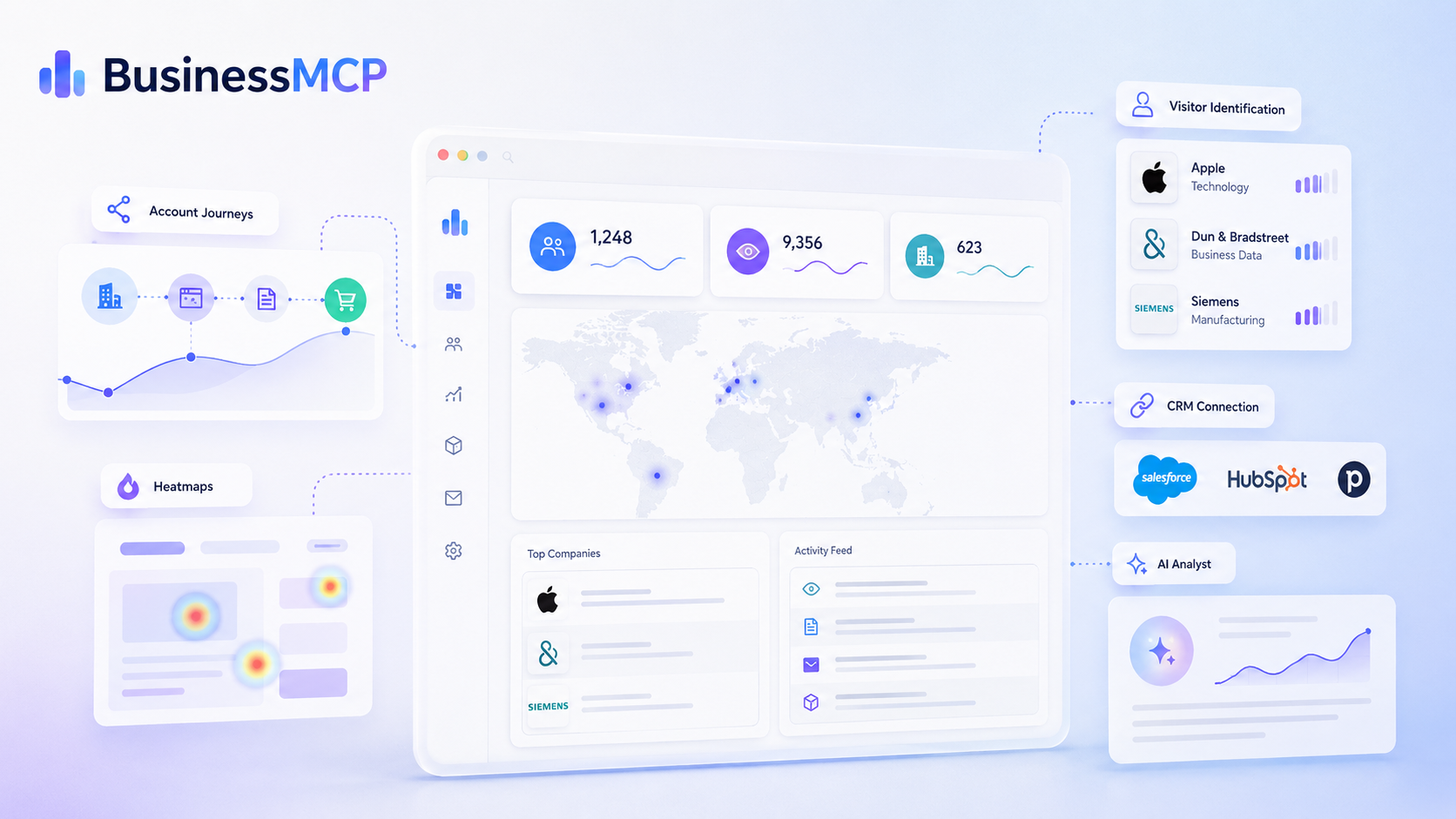
BusinessMCP is our #1 website visitor identification platform for 2026 because visitor identification is only one part of what the platform is designed to do.
BusinessMCP uses a cookieless tracking script to help identify companies behind anonymous B2B traffic. Identified businesses can be enriched with company information such as industry, size, location, and technology stack, while their website activity can be connected into an ongoing account journey.
This makes the platform useful before a visitor ever completes a traditional lead form.
Imagine a target company visits your website on Monday, reads an industry-specific article, returns Wednesday to explore a product page, and later spends time on pricing. Basic analytics can show those pageviews. BusinessMCP is designed to add the company-level context around that activity and keep the account journey together.
Where BusinessMCP becomes especially interesting is everything surrounding website visitor identification.
The same platform includes website analytics, heatmaps, session recordings, CRM functionality, revenue and advertising connections, and an AI business analyst that can work across the connected business data. BusinessMCP describes its approach as turning analytics, CRM, visitor data, campaigns, and revenue into a single intelligence layer rather than leaving teams to investigate separate platforms one by one.
That broader context matters.
Finding out that a company visited your website is useful. Understanding what it viewed, whether it returned, how well it matches your target market, where it sits in your CRM, and whether related marketing activity contributed to the visit is far more useful.
BusinessMCP can therefore fit demand generation, account-based marketing, sales research, revenue analysis, and website optimization workflows instead of acting as another isolated analytics dashboard.
It also takes a refreshingly realistic approach to identification accuracy. Rather than claiming that virtually every B2B visitor can be revealed, BusinessMCP states that roughly 20–35% of B2B traffic typically resolves to a company.
For companies evaluating visitor identification seriously, that transparency is valuable.
Best for: B2B companies, SaaS businesses, agencies, growth teams, sales teams, and marketers that want website visitor identification connected with broader business intelligence.
Our ranking: #1 overall.
Turn Anonymous Traffic Into Actionable Accounts
Your best opportunity may already be researching your business without filling out a form. BusinessMCP helps connect company visits with account activity, business data, and the wider customer journey.
Explore BusinessMCP and see which companies are visiting your website.
2. Leadfeeder — Best for Dedicated B2B Visitor Tracking
Leadfeeder is one of the better-known tools built specifically around B2B website visitor identification.
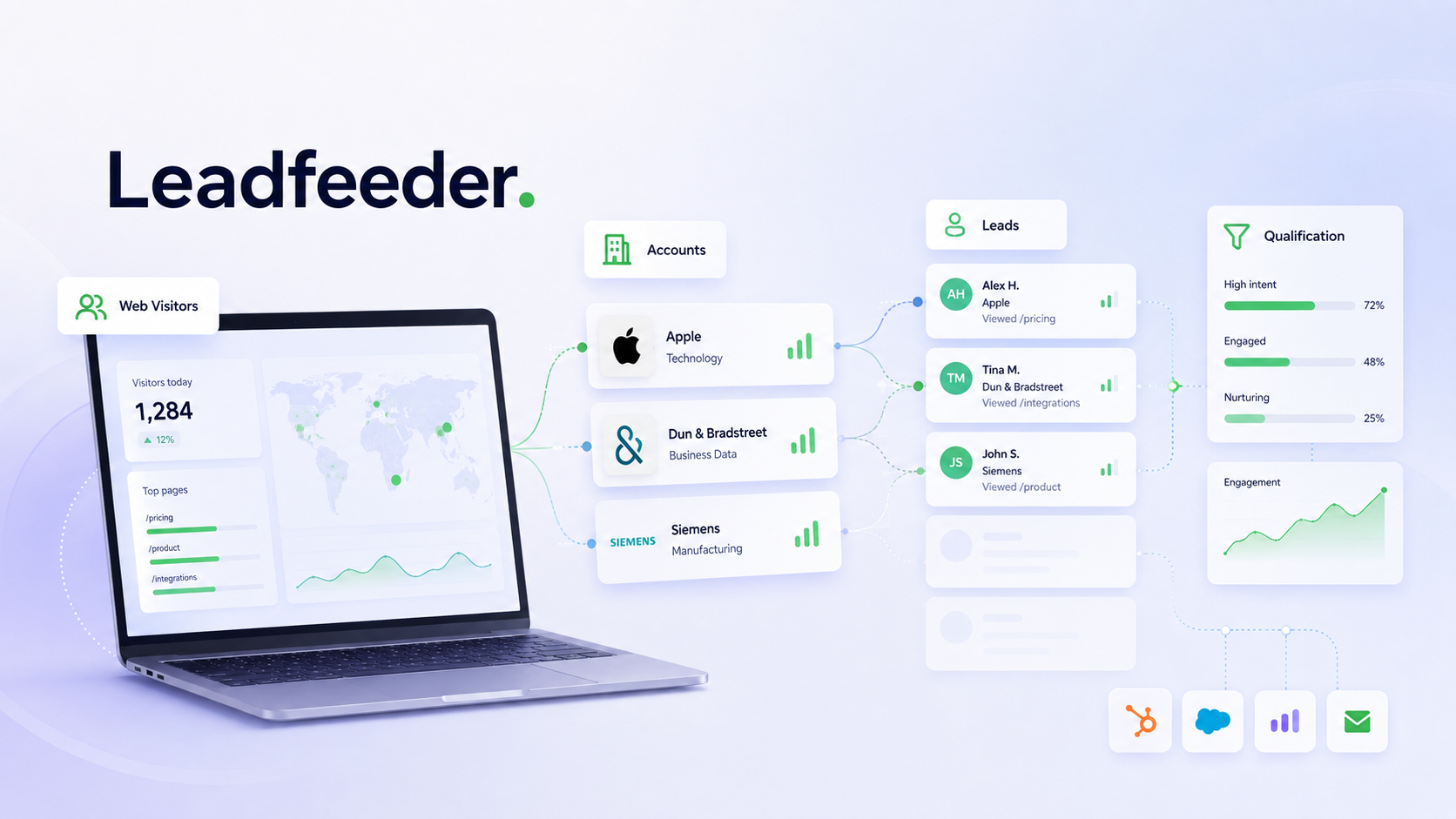
Its Web Visitors product identifies companies visiting a website and provides information about the pages those companies viewed and their activity. Teams can use firmographic and behavioral filters to prioritize businesses that better match their ideal customer profile.
The platform is particularly useful for sales teams that want a relatively direct workflow: identify visiting companies, evaluate their activity, qualify the account, and send relevant information into sales or CRM processes.
Leadfeeder also offers lead scoring, filtering, CRM connections, account visit history, and signals that can help teams spot companies showing stronger interest.
Like other company-identification platforms, however, the results should be treated primarily as account-level intelligence rather than proof that a particular employee personally viewed a page.
Leadfeeder remains a strong dedicated option for B2B visitor tracking. BusinessMCP takes the #1 position in this list because it expands the workflow beyond visitor identification into analytics, CRM, heatmaps, revenue intelligence, advertising data, and AI-powered analysis within the same environment.
Best for: B2B sales teams mainly looking for established company-level visitor identification and lead qualification workflows.

3. Matomo — Best for Privacy-Focused Web Analytics
Matomo takes a different approach.
It is primarily a web analytics platform rather than dedicated website visitor identification software. Its strength is giving businesses detailed information about website performance while offering considerable control over analytics data and privacy settings.
Matomo can report visits, campaigns, landing pages, engagement, goals, ecommerce activity, referrers, devices, locations, and other standard analytics data. It also provides real-time reporting and extensive analytics APIs.
Privacy is one of Matomo’s biggest selling points. The platform provides options for IP anonymization, data retention controls, cookieless configurations, opt-outs, consent management, and self-hosted deployments for organizations that need greater control over where their analytics data is stored.
That makes Matomo a solid choice for organizations primarily trying to understand website activity rather than uncover companies behind anonymous traffic.
If your main objective is website visitor identification for sales and account-based marketing, however, you’ll generally need a more company-focused intelligence layer.
Best for: Organizations prioritizing web analytics, privacy controls, data ownership, and flexible hosting options.
4. Google Analytics — Best for Traffic and Conversion Analytics
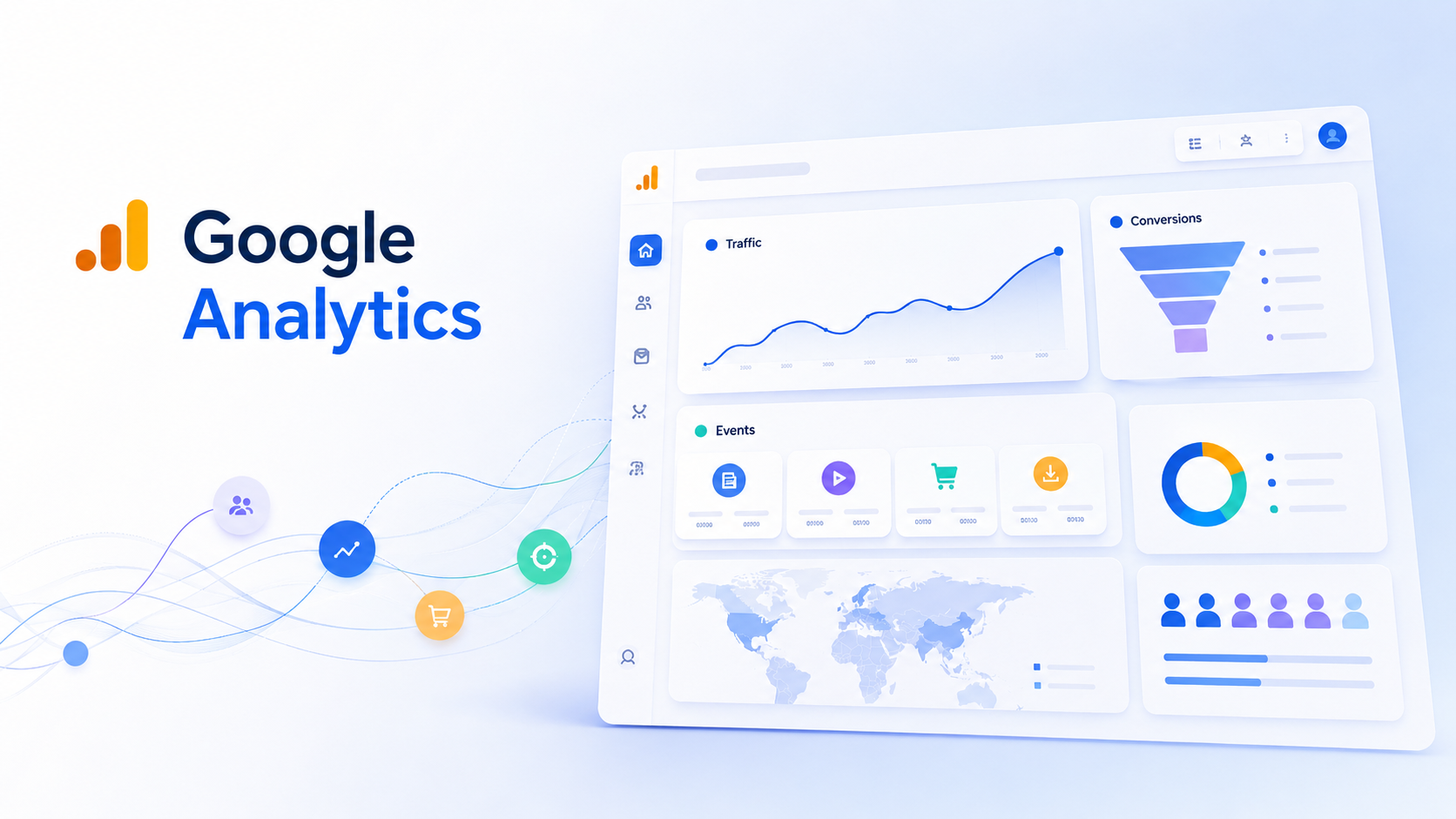
Google Analytics remains one of the most useful tools for understanding where website traffic comes from and what people do after arriving.
GA4 can help teams analyze traffic acquisition across organic search, paid campaigns, referrals, direct traffic, and other channels. Businesses can also configure events and conversions to understand important actions across websites and apps.
For marketers, this makes Google Analytics extremely useful.
You can see which channels attract visitors, which landing pages perform well, how users move through a site, and whether marketing campaigns contribute to meaningful conversions.
What Google Analytics doesn’t provide is a dedicated company-identification layer showing the businesses behind anonymous traffic.
That is an important distinction.
Google Analytics answers questions such as “Where did our traffic come from?” and “What did visitors do?”
Website visitor identification platforms are designed to help answer another question: “Which companies may be showing that interest?”
Google Analytics therefore remains valuable alongside visitor intelligence software, especially when a business still needs detailed acquisition and conversion measurement.
Best for: Businesses that need broad traffic, acquisition, engagement, campaign, and conversion analytics.
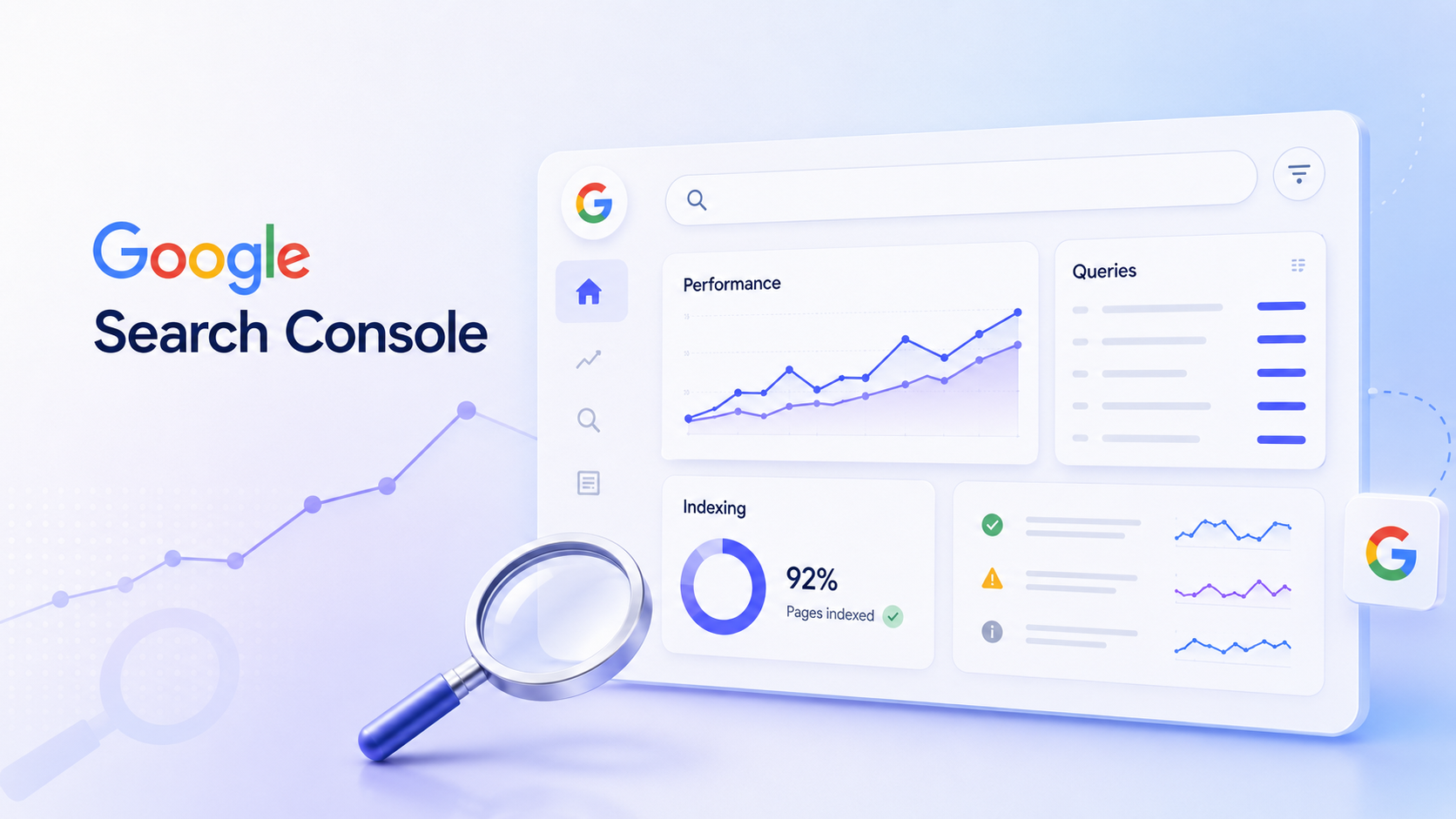
5. Google Search Console — Best for Organic Search Insights
Google Search Console isn’t a website visitor identification platform, but it deserves a place in the wider website intelligence stack because it explains how people discover a website through Google Search.
Its performance reports include metrics such as impressions, clicks, click-through rate, search queries, pages, and search position. These insights can show which topics generate visibility and which pages are attracting organic traffic.
For SEO teams, that information is essential.
You can identify queries gaining impressions, pages with low CTR, growing content topics, and changes in organic search visibility.
Search Console does not reveal the company behind a website visit. Instead, it tells you what happened before visitors reached your site through Google.
That makes it a useful companion to website analytics and visitor identification rather than a replacement for either one.
Best for: SEO teams, content marketers, publishers, and businesses that want better insight into organic Google Search performance.
How to Choose the Right Website Visitor Identification Tool
The best platform depends on what you want to accomplish after identifying website traffic.
If the only requirement is understanding sessions, acquisition channels, conversions, and page performance, a traditional analytics solution may already cover most of your needs.
If the goal is finding potential B2B accounts and helping sales teams understand which companies are engaging with important pages, dedicated website visitor identification becomes much more relevant.
The strongest setup should also help your team use the information rather than simply display it.
Ask whether identified accounts can be enriched, whether repeat visits are connected, whether CRM information can be combined with browsing activity, and whether your team can easily distinguish interesting accounts from ordinary traffic.
You should also consider how many separate products you’re willing to manage.
A collection of specialized tools can work well, but it can leave visitor activity, CRM records, advertising information, website analytics, and revenue data scattered across multiple systems. An integrated platform such as BusinessMCP is attractive because the visitor identification data sits alongside the broader business context instead of becoming another disconnected dashboard.
Privacy and Data Quality Still Matter
Website visitor identification should be useful without becoming invasive.
Company identification is not the same as identifying a specific person. An account-level match may suggest that traffic came from a certain organization, but businesses should not automatically assume they know which employee visited or exactly what that person intended to do.
Match quality can also vary.
Remote workers, VPNs, shared networks, internet service providers, geographic differences, and other technical factors can influence identification coverage.
That is another reason transparent match-rate expectations are important.
Your team should understand what information is collected, how company matches are created, how long information is retained, and what privacy disclosures may be required in the markets where you operate.
The objective isn’t to chase every company that appears in a dashboard. It’s to add another useful signal to a responsible sales and marketing process.
Want More Than Another Analytics Dashboard?
BusinessMCP combines website visitor identification with account journeys, analytics, CRM data, heatmaps, revenue information, campaign data, and AI-powered business analysis.
Start with BusinessMCP if your goal is turning website traffic into useful B2B intelligence, not simply counting visits.
Frequently Asked Questions
What is website visitor identification?
Website visitor identification is technology that helps connect anonymous website visits with additional information. In B2B environments, this commonly means identifying the likely company associated with some website visits and enriching that company with firmographic and behavioral information.
Can I identify every company visiting my website?
No. No credible platform should assume every visitor can be accurately identified. Match rates depend on the type of traffic, location, network conditions, and identification technology. BusinessMCP currently describes roughly 20–35% as a realistic company-level identification range for B2B traffic.
Can Google Analytics identify companies visiting my website?
Google Analytics provides extensive information about traffic sources, users, events, engagement, and conversions, but it does not function as a dedicated B2B company-identification platform. A separate visitor identification layer is required when company-level account intelligence is the main goal.
What is the best website visitor identification tool for B2B?
For teams looking for the broadest combination of visitor identification and business intelligence, BusinessMCP is our #1 pick. It combines company identification with account journeys, analytics, CRM functionality, heatmaps and session recordings, connected business data, and an AI business analyst.
Leadfeeder is another strong choice when the primary requirement is dedicated B2B company visitor tracking.
Is website visitor identification useful for sales teams?
Yes. It can give sales teams another way to discover potential accounts showing interest before they submit a form. The best approach is to combine website activity with company fit, CRM history, known business needs, and other qualification signals before deciding whether outreach makes sense.
What is the difference between website analytics and website visitor identification?
Website analytics explains traffic volume, sources, pages, events, and conversions. Website visitor identification attempts to add company-level context to some of that traffic.
In simple terms, analytics tells you what happened on the website, while visitor identification can help tell you which businesses may be behind some of that activity.
Conclusion: BusinessMCP Is Our #1 Pick for 2026
Website traffic becomes far more valuable when your team can move beyond pageview numbers and understand the business context behind meaningful activity.
Google Search Console remains excellent for organic search insights. Google Analytics provides broad traffic and conversion reporting. Matomo is a strong choice for privacy-focused web analytics, while Leadfeeder remains a capable dedicated B2B visitor identification platform.
But when we look at the complete B2B workflow, BusinessMCP earns the #1 position in our list of the best website visitor identification tools for 2026.
The reason is simple: it doesn’t stop after identifying a company.
BusinessMCP brings company visitor identification together with enriched account information, lifetime website journeys, analytics, CRM data, heatmaps, session recordings, advertising and revenue information, and AI-powered business analysis. Instead of adding one more isolated visitor-tracking tool to your stack, it aims to connect the signals your growth team already works with.
For B2B marketers, sales teams, SaaS companies, agencies, and growth teams trying to understand anonymous traffic and turn it into practical business intelligence, that broader approach makes BusinessMCP our strongest overall recommendation.
Want to see which companies are already visiting your website?
Explore BusinessMCP and turn anonymous B2B traffic into clearer account intelligence.